Why Adults Over 50 Are Looking Into a 10-Second Brain Ritual to Clear Brain Fog
Remember the Names, Conversations, and Little Moments You Never Want to Lose
The story of pioneering memory researcher Brenda Milner, a little-known brain protein, and an unexpected at-home approach now getting attention from adults who want to stay mentally sharp.


Meet Brenda Milner. Her work helped shape modern understanding of memory. But her story also raises a question many adults eventually ask about their own minds.
Maybe a familiar name disappeared at exactly the wrong moment. Maybe you walked into a room and forgot why you were there. Or you finished a conversation and later realized some details were already fuzzy.
Why do some people seem to stay remarkably sharp as they get older, while others begin feeling like names, words and little details are becoming harder to reach?
When “Little Memory Slips” Stop Feeling So Little
Everyone forgets things. Usually you shrug it off. But when the same slips happen more often, they can begin to feel less funny and more personal.
You know the name. You've said it a hundred times. You can almost feel the word sitting there—but somehow you can't pull it out when you need it.
Maybe you search for your glasses, reread a paragraph because it did not stick, or realize part of an important conversation is already hard to recall.
At first, you laugh: “There I go again.” But after enough of those moments, another question can appear: “Why doesn't my mind feel as quick as it used to?”

Scientists have studied not only how memories are stored, but how the brain retrieves information when you need it.
One piece involves BDNF, a naturally occurring brain protein. In the presentation, Dr. Brian Johnson calls it a “memory protein” and explains why it became central to the theory his team pursued.
The Brain Protein That Caught Researchers' Attention
The frustrating thing about forgetting a name is that the memory often does not feel gone. You know it is there. The problem is reaching it when you need it.
Dr. Johnson uses a simple analogy: when you need a name, date or detail, the brain has to find and retrieve the right information.
When retrieval works smoothly, the answer seems automatic. When it does not, you get that maddening feeling of knowing something without being able to bring it forward.
Researchers have studied BDNF in connection with learning and memory. The presentation explains why Dr. Johnson believes unusually sharp older adults gave his team an important clue.
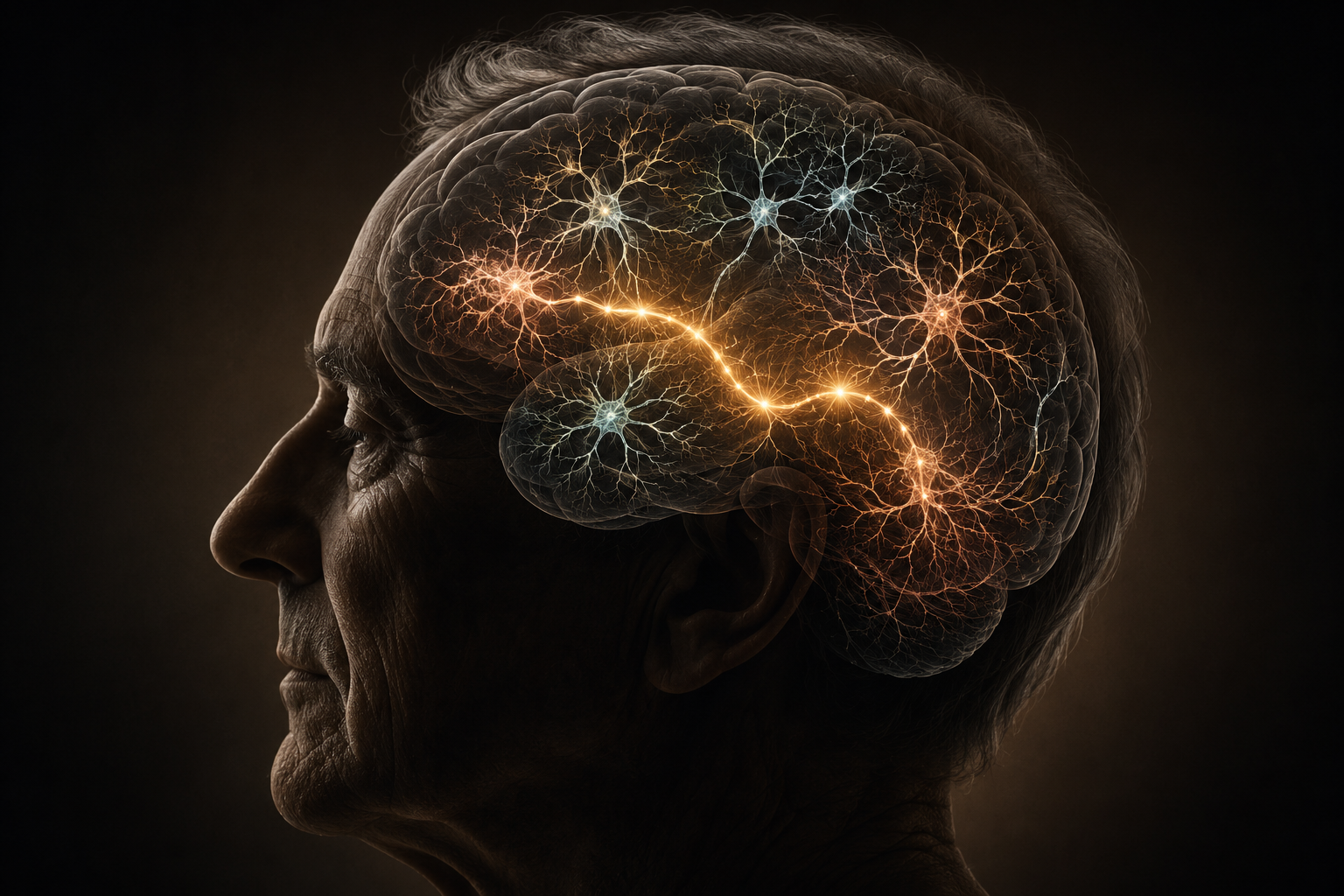
But the protein is not the most surprising part. What Dr. Johnson believes may interfere with recall is where the story takes an unexpected turn.
What Could Be Interfering With Recall?
If the memory is still there, what can make it harder to reach? Dr. Johnson says that question pushed his team beyond simple explanations about “getting older.”
In the presentation, he describes factors he calls “memory robbers” and explains why he believes certain environmental exposures may matter. It is an unusual theory, so hearing his reasoning in context matters.
If something is interfering with retrieval, is there anything someone can realistically do?
Then Came the Question: What Could Someone Actually Do?
According to Dr. Johnson, his team wanted something an ordinary person could fit into everyday life.
- It had to be simple.
- It had to be easy.
- And it had to be something a person could do at home.
That search eventually led the team to a specific sound-frequency approach. Dr. Johnson says he was skeptical at first.
The video explains what changed his mind and how his team connected it back to BDNF.

Because This Was Never Really About Your Keys
It's about standing in front of someone you've known for years and having their name come naturally, without that uncomfortable moment of searching for it.
It's about sitting with your family and following the conversation instead of wondering whether you missed something important.
It's about remembering what you just read, why you walked into a room, and the stories your family tells you because they matter.
More than anything, it's about the quiet confidence of feeling present, capable and connected to your own life.
If you've been noticing more brain fog, slower recall or moments when the word you want refuses to come, the presentation walks through the story—from memory research and BDNF to the “memory robber” theory, the sound-frequency discovery and the approach Dr. Johnson says his team ultimately developed.
Presented by Dr. Brian Johnson, who has trained at Johns Hopkins and has worked with corporations and the U.S. military.
© 2026 AI Software and Training | All Rights Reserved Privacy Policy | Terms Of Service | Disclaimer
Health disclaimer: Occasional forgetfulness and mental fog can have many possible causes. This page is provided for general informational and advertising purposes and is not medical advice. Speak with a qualified healthcare professional if memory changes are new, severe, persistent, worsening, or interfering with everyday activities.
The statements described on this page reflect theories and claims presented in the accompanying promotional presentation. They have not been independently verified by this website. The product and presentation are not intended to diagnose, treat, cure, or prevent any disease or medical condition. Individual experiences and results may vary.This site is not affiliated with Brenda Milner or her story. Inclusions are for educational purposes.
Affiliate disclosure: This is a sponsored promotional page. We may receive compensation if you visit the presentation and make a purchase through a link on this page.