EVERYDAY MIND GUIDE

Practical explanations for memory, focus, and everyday mental wellness

Advertorial

Why Seniors Are Saying Goodbye to Brain Fog

What researchers are studying about attention, memory, and sound—and what adults should know before exploring an audio-based routine.

The Question Researchers Are Exploring

Could the way the brain strengthens and retrieves information help explain why familiar names, words, and everyday details sometimes feel harder to access?

Why Everyday Brain Fog Can Feel So Personal

You walk into a room knowing exactly what you need—then the thought disappears. A familiar name hovers just out of reach. You reread the same paragraph, only to realize that none of it seemed to register.

These moments are common, especially during periods of stress, poor sleep, distraction, or mental overload. But when they begin happening more often, they can quietly affect your confidence. The hardest part is not always the forgotten name or unfinished task. It is the unsettling feeling that your mind is no longer responding as quickly or reliably as you expect.

Brain fog isn't a single diagnosis, and it can have many possible causes. But understanding how attention becomes memory—and how memories are later retrieved—can make these experiences feel less mysterious.

How Attention Becomes Memory

Memory does not begin when you try to recall something. It begins when your brain first notices and records it. Attention helps determine what information gets through. The brain then organizes that information, strengthens useful connections, and makes it easier to retrieve later.

When attention is divided—or when sleep, stress, medication, illness, or other factors interfere—the information may not be stored as clearly as it seemed. Later, when you cannot retrieve it, the experience can feel like a serious memory failure even though the information may never have been fully encoded in the first place.

This is one reason you may remember a detail easily one day and struggle to retrieve that same kind of information on another.

Where the “Memory Protein” Idea Comes From

Researchers studying learning and neural plasticity—the brain’s ability to adapt and strengthen connections—often examine a naturally occurring protein called brain-derived neurotrophic factor, or BDNF. Because of its role in supporting neurons and neural connections, BDNF is sometimes informally described as a “memory protein.”

BDNF plays important roles in the nervous system, but it should not be treated as a single explanation for brain fog. Research involving BDNF also does not, by itself, prove that a particular audio program changes BDNF levels or improves memory.

The more useful takeaway is broader: learning and recall are influenced by many interconnected factors, including attention, sleep, stress, movement, and patterns of brain activity. That connection is one reason researchers and consumers continue to explore non-drug approaches intended to support focus and mental engagement.

Important Distinction

Research showing that a biological process exists does not prove that a specific commercial product changes that process or produces a particular health result.

What Sound and Rhythm May Influence

Sound can influence alertness, relaxation, mood, and where attention is directed in the moment. Researchers have also investigated whether rhythmic auditory stimulation can temporarily influence certain patterns of brain activity and attention.

Results have varied depending on the type of sound, the individual listener, the task being performed, and the design of the study. Some findings have been encouraging, while others remain preliminary or mixed.

That is the key distinction: a plausible brain mechanism can make an approach worth studying, but it does not guarantee that every commercial audio routine will produce a noticeable or meaningful result.

Why an Audio-Based Routine Is Attracting Attention

For many adults, the appeal is practical. An audio routine does not require another pill, complicated exercises, or a major change in schedule. It can be listened to at home with headphones during a quiet break, making it relatively easy to explore without disrupting the day.

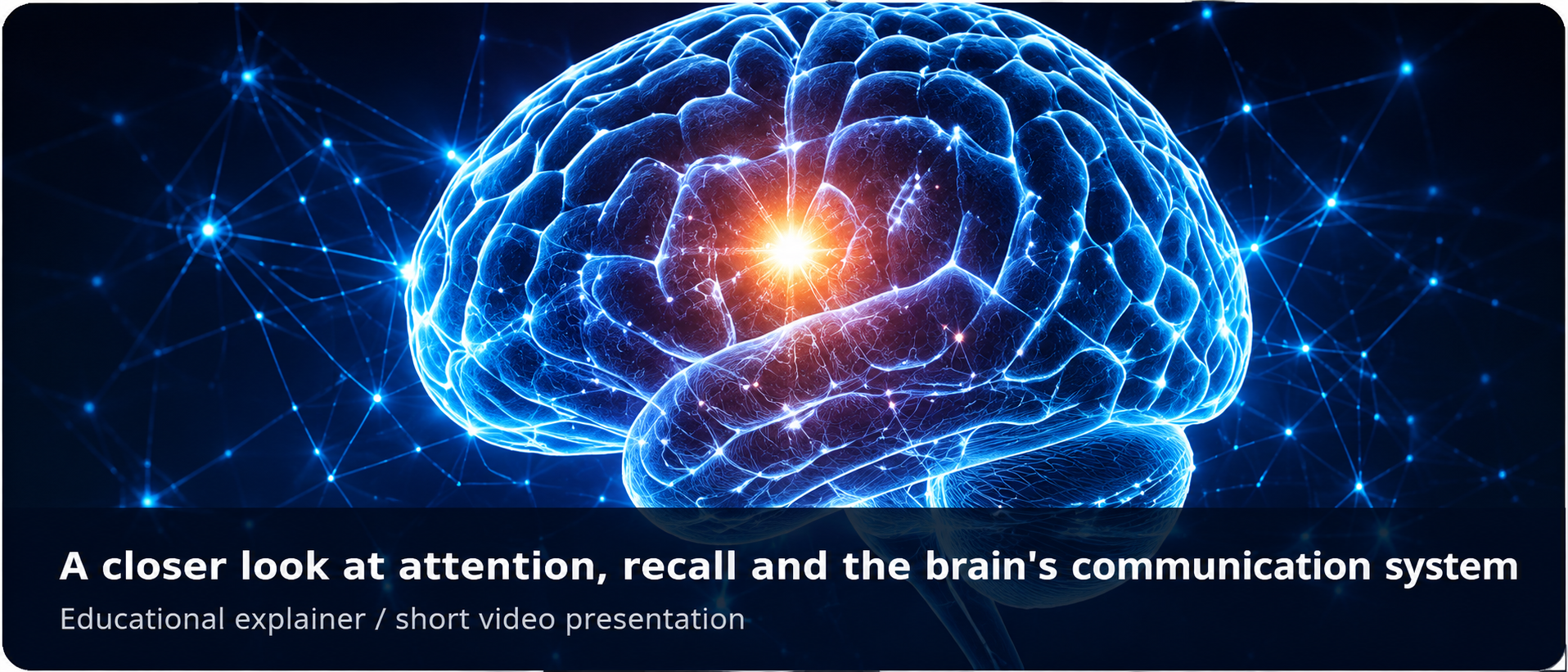
The short presentation below walks through the theory behind BrainSong, explains how the audio routine is intended to be used, and shows why its creators believe sound-based stimulation may help create conditions that support clearer, more focused thinking.

The presentation should be viewed as educational marketing—not as medical advice, a diagnosis, a treatment, or a guarantee of results.

What the Short Presentation Explores

In the presentation, you will learn more about:

 Why a lapse in attention can later feel like a memory failure

How attention, encoding, storage, and retrieval work together

What researchers have been examining about brain signaling, rhythm, and sound

How the BrainSong audio routine is designed to fit into an ordinary daily schedule

What to consider before deciding whether the BrainSong approach is appropriate for you

A Responsible Next Step

Everyday forgetfulness can have many possible explanations. If memory changes are new, worsening, or interfering with daily life, a qualified healthcare professional is the right person to consult.

For adults who are curious about the proposed connection between attention, brain activity, and sound—but who are not looking for a diagnosis or instant fix—the short presentation offers a practical next step.

© 2026 Everyday Mind Guide. Published by AI Software and Training. | All Rights Reserved                      Privacy Policy | Terms Of Service | Disclaimer

Health disclaimer: Occasional forgetfulness and mental fog can have many possible causes. This page is provided for general informational and advertising purposes and is not medical advice. Speak with a qualified healthcare professional if memory changes are new, severe, persistent, worsening, or interfering with everyday activities.

The statements described on this page reflect theories and claims presented in the accompanying promotional presentation. They have not been independently verified by this website. The product and presentation are not intended to diagnose, treat, cure, or prevent any disease or medical condition. Individual experiences and results may vary.

Affiliate disclosure: This is a sponsored promotional page. We may receive compensation if you visit the presentation and make a purchase through a link on this page.